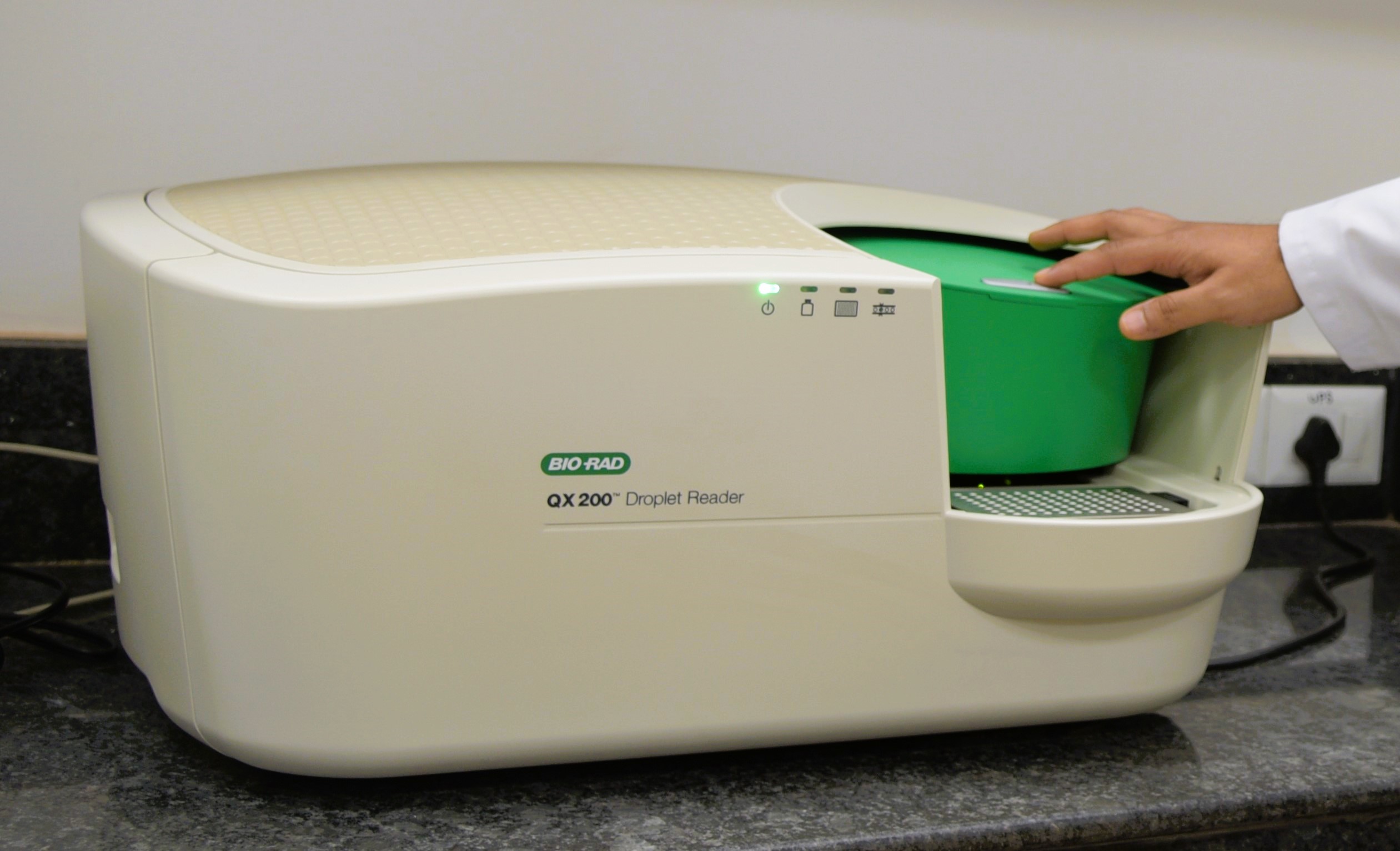
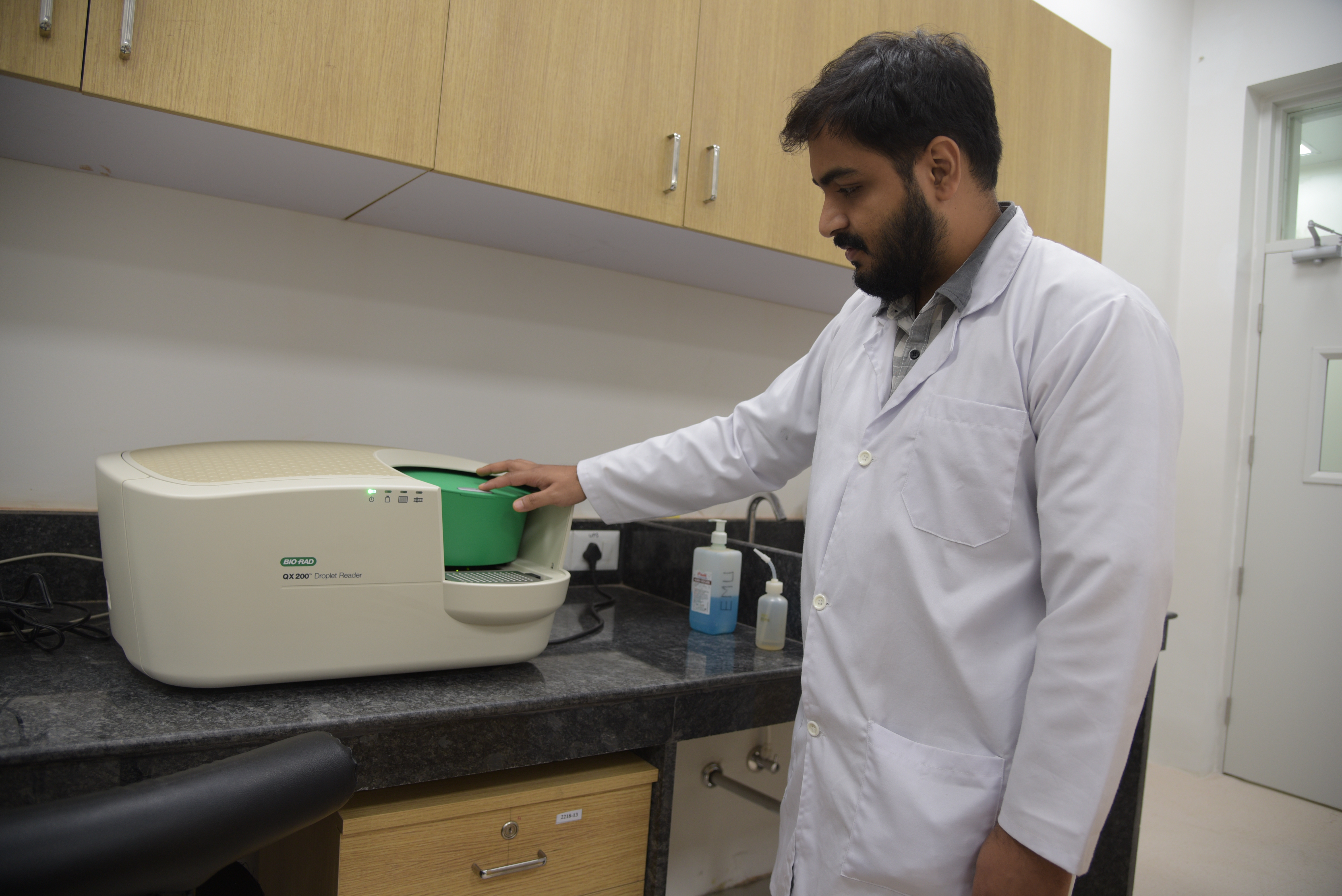
The Droplet Digital Polymerase Chain Reaction (ddPCR) instrument offers a significant advancement over traditional PCR methods by providing highly precise and sensitive quantification of nucleic acids. Unlike conventional PCR, which relies on exponential amplification and is prone to variability, ddPCR partitions the sample into thousands of individual droplets, allowing for absolute quantification without the need for standard curves. This droplet-based system enables the detection of rare genetic mutations, copy number variations, and low-abundance targets with greater accuracy.
Additionally, ddPCR minimizes the effects of PCR inhibitors and enhances reproducibility, making it an ideal choice for applications in cancer research, gene expression analysis, and pathogen detection. By choosing ddPCR, researchers can achieve more reliable results, paving the way for groundbreaking discoveries in molecular biology.
ddPCR is a versatile tool with a wide range of applications in molecular biology, including:
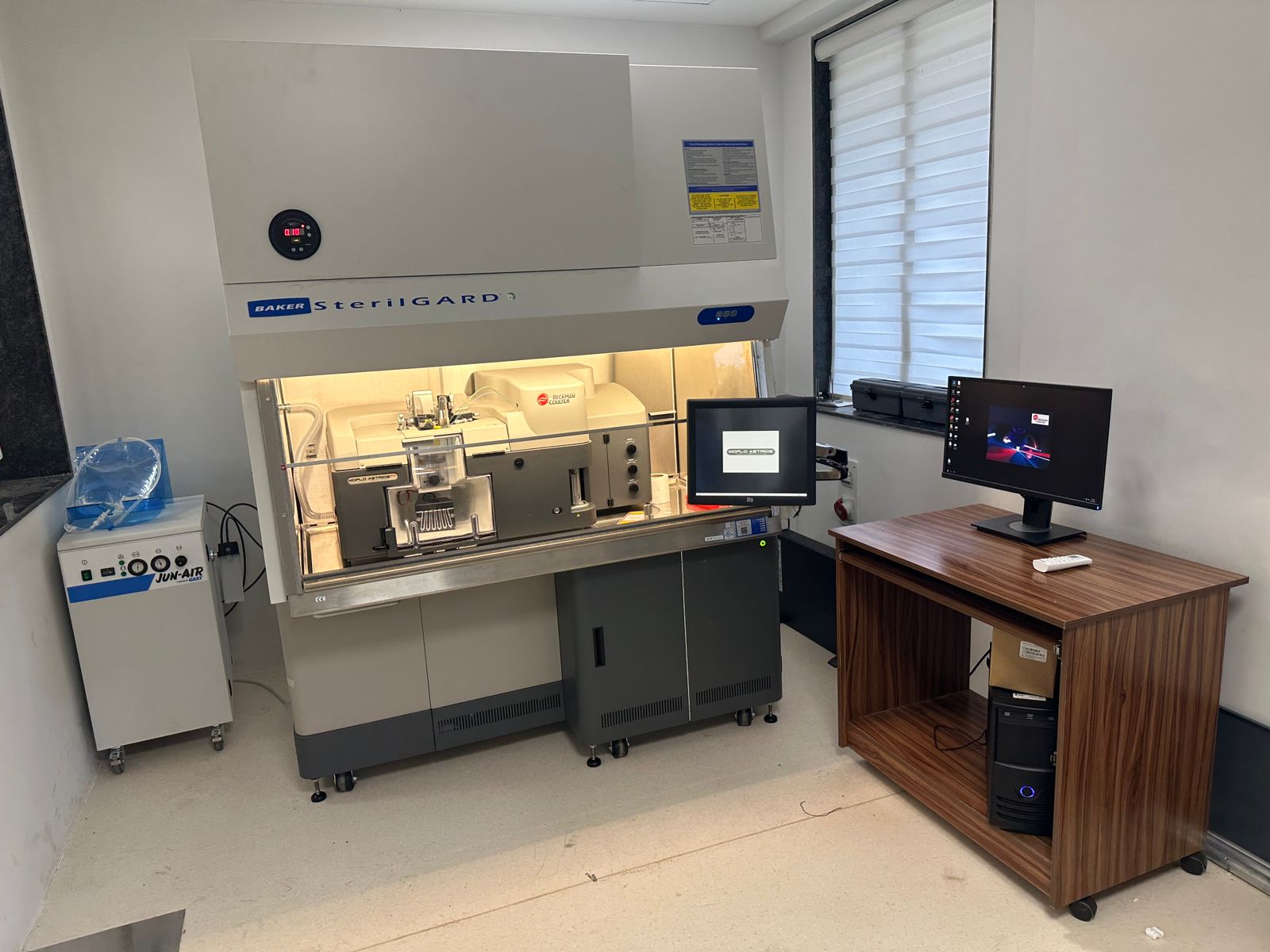
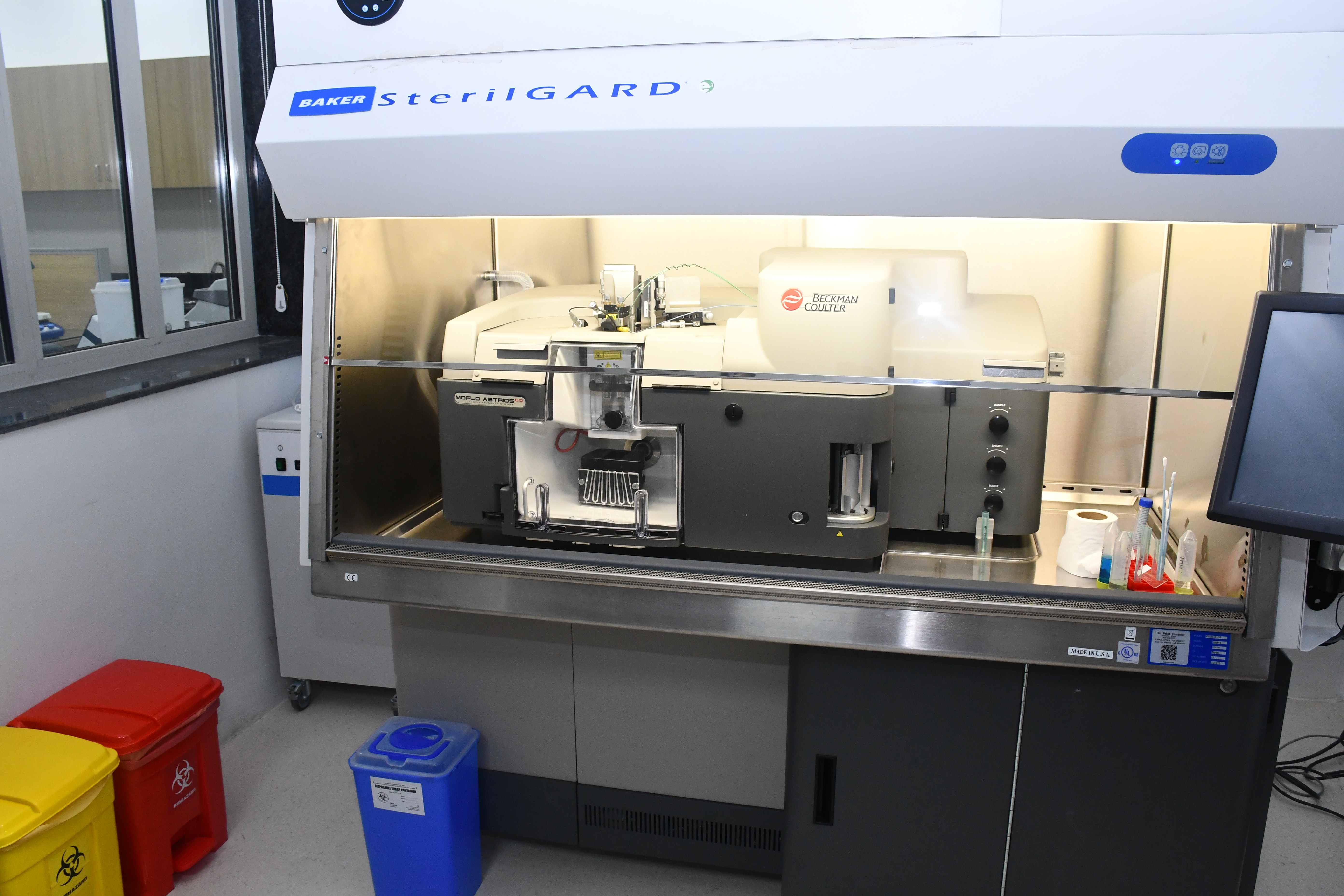
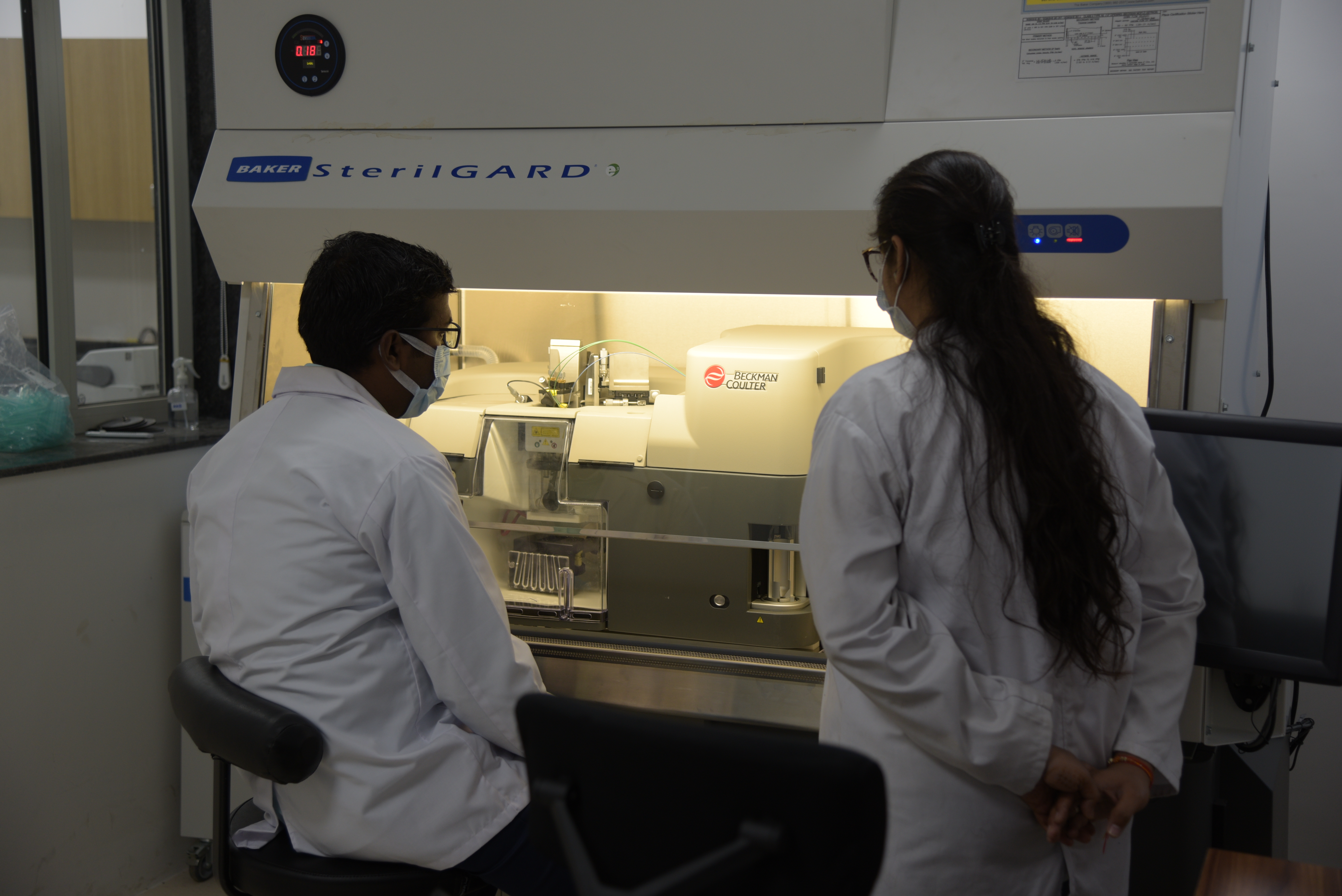
Fluorescence-activated cell sorting (FACS) is a powerful and versatile instrument widely used in biomedical research for cell analysis and sorting. FACS allows for the precise identification and isolation of specific cell populations based on fluorescent labeling. Unlike traditional cell sorting methods, FACS enables high-throughput sorting of individual cells with exceptional accuracy, even within heterogeneous mixtures. This technology is particularly valuable for applications such as:
The precision, speed, and ability to sort cells based on multiple parameters simultaneously make FACS an essential tool for modern cell biology and clinical diagnostics.
| User Type\ Charges | Per day (Rs.) | Per Week (Rs.) | Per Month (Rs.) |
|---|---|---|---|
| Academic (Internal Users) | 100/- | 250/- | 800/- |
| Academic (External Academic User)/ Startup | 200/- | 500/- | 1600/- |
| External (National R&D Labs)/ Non Academia | 500/- | 1500/- | 8000/- |
| Industry personnel / Non Academia | 1000/- | 5000/- | 15000/- |
| User Type\ Charges | Per Hour (Rs.) |
|---|---|
| Academic (Internal Users) | 200/- * |
| Academic (External Academic User)/ Startup | 500/-* |
| External (National R&D Labs)/ Non Academia | 800/- |
| Industry personnel / Non Academia | 2000/-# |
| * Additional hour Rs. 100/ hr | |
| # Additional Hour Rs. 200/hr | |
| Note : All consumables including the sheath fluid must be arranged by the user. |
| User Type\ Charges | Per Run (Rs.) | |
|---|---|---|
| Academic (Internal Users) | 250/- | |
| Academic (External Academic User)/ Startup | 500/- | |
| External (National R&D Labs)/ Non Academia | 1000/- | |
| Industry personnel / Non Academia | 2000/- | |
| Note : | ||
| 1. All consumables must be arranged by the user. | ||
| 2. A minimum of 8 samples are required for the above-mentioned charges. | ||
| 3. FOLLOWING IMPORTANT INSTRUCTIONS MUST BE FOLLOWED BY THE USERS. | ||
|
||
| PS: It is strictly advised to follow SOPs for the upstream experiments and the aforementioned instructions, in order to get good quality data and for better troubleshooting, if required. | ||
| User Type\ Charges | For LC-UV or LC-ELSD * [sample/injection/hr] | LC-UV- ELSD * [sample/injection/ hr] |
|---|---|---|
| Academic (Internal Users) | 100/- | 150/- |
| Academic (External Academic User)/ Startup | 500/- | 750/- |
| External (National R&D Labs)/ Non Academia | 1000/- | 1500/- |
| Industry personnel / Non Academia | 2500/- | 3000/- |
| * for every additional hour: - Rs 50/- for internal user; Rs 100/- External users (Both Academia and Non-Academia); AND Rs. 200/- Industry User | ||
| Note : | ||
| Guidelines and charges for usage of the system | ||
| User must arrange the following | ||
|
||